Continuous dissolution process of cellulose in NMMO
At the beginning of this century, a new process for dissolving cellulose spinning solutions was developed. This new process is based on the traditional method of cellulose production (that is, the derivatization of cellulose with dithionite).
The current research and development efforts are mainly divided into two directions:One is a process similar to the classic viscose manufacturing method: in this process, the solvent used is changed, and the dissolution process is intermittent.The other is a process similar to homogeneous polymerization: in this process, the solvent is also changed, and the dissolution process is continuous.
The fibers produced through these processes and using ion liquids or NMMO (N-methylmorpholine oxide) solvents have been internationally registered as lyocell.
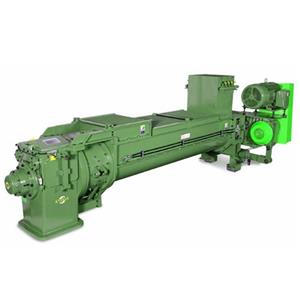
KaiZheng Company has achieved the dissolution process of cellulose by applying blending and kneading techniques, which is divided into two steps. The first step is to pre-treat the raw materials in the mixing/kneading machine; the second step is to dissolve the cellulose in the ion liquid or NMMO solution.
KaiZheng's proprietary technology and the mixing/stirring equipment for the heat treatment of high-viscosity materials. This technology provides equipment with a large working volume, featuring both high-intensity mixing/stirring performance and a wide range of self-cleaning heat exchange surfaces.The obvious advantages of the mixer/stirrer include: being able to handle heterogeneous product phases in a single device; high interface renewal rate to ensure effective energy transfer; efficient combination of static and dynamic elements in the process chamber to achieve high shear homogenization.High energy flux and precise control of product temperature, the single unit equipment has a large production capacity. The closed and sealed design ensures low operational risks when handling hazardous materials. The axial conveying speed of the product is not affected by the speed of the stirrer, and the residence time range is wide (from 10 minutes to several hours), and it has a large surface area to volume ratio.