-
1709-2026
Concentrated dissolving for homogeneous spinning dope
In traditional spinning solution production, the production capacity is usually determined by the maximum processing viscosity that the spinning plant can handle. In typical wet spinning operations, the solubility range of the solution that can be processed is 500 - 2500 pascal-seconds. Kaizheng Company has now adjusted its high-viscosity processing technology to address the complex processing challenges of today's high-yield fiber production lines. This technology can easily handle solutions with viscosities ranging from 5000 to 100,000 pa.s.
-
1109-2026
Continuous dissolution process of cellulose in NMMO
At the beginning of this century, a new process for dissolving cellulose spinning solutions was developed. This new process is based on the traditional method of cellulose production (that is, the derivatization of cellulose with dithionite).
-
2708-2026
Cellulose dissolution process
In recent years, the global attention towards modifying cellulose using the lyocell process has significantly increased. Nowadays, regardless of the source, raw cellulose can be obtained as a low-cost raw material and can be processed into short fibers, long filaments and films. The core of the lyocell processing technology lies in the dissolution process and the spinning step. KaiZheng Company has optimized the cellulose dissolution technology. This technology has successfully produced high-quality spinning solutions from various low-cost raw materials, while meeting the current high safety standards.
-
1208-2026
Optimizing Lyocell Dissolution for Versatile Applications
In recent years, the global attention towards modifying cellulose using the lyocell process has significantly increased. Nowadays, regardless of the source, raw cellulose can be obtained as a low-cost raw material and can be processed into short fibers, long filaments and films. The core of the lyocell processing technology lies in the dissolution process and the spinning step.
-
3007-2026
Biomass technology:technological services
Pyrolysis is a type of thermal chemical treatment of biomass carried out under anaerobic conditions and at temperatures ranging from 200 to 300 degrees Celsius. This treatment can cause beneficial changes in biomass, such as improving grinding performance, increasing calorific value, reducing the contents of chlorine, nitrogen and sulfur, decreasing the equilibrium moisture content, and enhancing the resistance to biodegradation.
-
1507-2026
Perfect dissolving technology for very good fiber quality
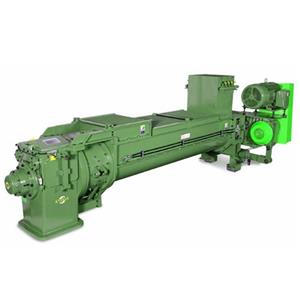
Fibers and the like are the final products formed after a series of complex processes such as mixing, dissolving, spinning and drying. The quality of the fibers depends on the dissolution step in the preparation of the original solution. Only completely dissolved raw materials can form a uniform, pure and bubble-free spinning solution. This solution then needs to be further processed through an adjusted spinning nozzle. At the same time, the dissolution and spinning processes must be flexible enough to adapt to different types of raw materials. The dual-axis self-cleaning equipment of KaiZheng Company has been successfully applied in this type of process. In the later stage of the dissolution process, its viscosity can reach 5000 Pa.s, and in extreme cases, it can reach 100000 Pa.s.
-
0106-2026
Improved lyocell dissolving system
Lyocell fiber technology aims to convert cellulose into a man-made, cotton-like fiber. The lyocell process involves a series of processing steps, with the dissolution step being the most critical. A kneader developed by KaiZheng has been successfully applied in the continuous dissolution stage, enabling the treatment of raw materials from various sources and their conversion into spinnable dope.
-
2403-2026
Escalating Tensions in the Strait of Hormuz Disrupt Global Foreign Trade
As of March 23, 2026, tensions in the Strait of Hormuz have intensified amid a US-Iran standoff. A 48-hour ultimatum previously issued by the United States is set to expire at 7:45 Beijing Time on March 24. In response, Iran has imposed targeted shipping restrictions, banning vessels from hostile nations while allowing negotiable passage for ships from non-hostile countries. Disruptions to this global "chokepoint" for energy and trade are rapidly rippling through the global trading system, delivering an all-round, systemic shock to global foreign trade across energy supplies, shipping logistics, and supply chain security.
-
3001-2026
Raw Material Substitution: High-Quality Petrochemical Development
At present, China's petrochemical industry is confronted with the dual challenges of global overcapacity and high domestic raw material costs. Particularly, China lacks low-cost raw materials such as associated gas from oil fields and shale gas, which leads to persistently high production costs for core chemical products like ethylene. In 2023, there was a situation where related products in the United States were highly profitable while Chinese enterprises suffered comprehensive losses. How to break this deadlock? The article "Raw Material Substitution Facilitates High-Quality Development of China's Petrochemical Industry" published in the journal "Chemical Industry and Engineering Progress" has pointed out a clear path for us. This article, based on the core viewpoints of the original text, will help you understand the core logic and practical directions of raw material substitution.
-
1811-2025
China's Cellulosic Ethanol Development Path Becomes Clearer
Introduction:With the deepening of the "Dual Carbon" strategy, cellulosic ethanol, as a core direction of second-generation bio-liquid fuels, has regained focus in the energy and chemical industry due to its significant potential in emissions reduction, avoiding competition with food supplies, and waste resource utilization. Through over a decade of technological accumulation and engineering demonstration, China has achieved a series of breakthroughs in core technologies, equipment, and industrial demonstration, moving from the "technology verification" stage to the critical "pre-commercialization" phase.