-
0106-2026
Improved lyocell dissolving system
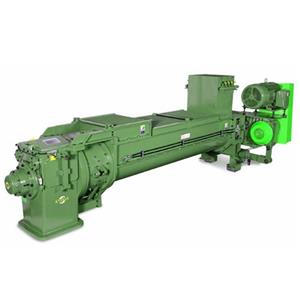
Lyocell fiber technology aims to convert cellulose into a man-made, cotton-like fiber. The lyocell process involves a series of processing steps, with the dissolution step being the most critical. A kneader developed by KaiZheng has been successfully applied in the continuous dissolution stage, enabling the treatment of raw materials from various sources and their conversion into spinnable dope.
-
2403-2026
Escalating Tensions in the Strait of Hormuz Disrupt Global Foreign Trade
As of March 23, 2026, tensions in the Strait of Hormuz have intensified amid a US-Iran standoff. A 48-hour ultimatum previously issued by the United States is set to expire at 7:45 Beijing Time on March 24. In response, Iran has imposed targeted shipping restrictions, banning vessels from hostile nations while allowing negotiable passage for ships from non-hostile countries. Disruptions to this global "chokepoint" for energy and trade are rapidly rippling through the global trading system, delivering an all-round, systemic shock to global foreign trade across energy supplies, shipping logistics, and supply chain security.
-
3001-2026
Raw Material Substitution: High-Quality Petrochemical Development
At present, China's petrochemical industry is confronted with the dual challenges of global overcapacity and high domestic raw material costs. Particularly, China lacks low-cost raw materials such as associated gas from oil fields and shale gas, which leads to persistently high production costs for core chemical products like ethylene. In 2023, there was a situation where related products in the United States were highly profitable while Chinese enterprises suffered comprehensive losses. How to break this deadlock? The article "Raw Material Substitution Facilitates High-Quality Development of China's Petrochemical Industry" published in the journal "Chemical Industry and Engineering Progress" has pointed out a clear path for us. This article, based on the core viewpoints of the original text, will help you understand the core logic and practical directions of raw material substitution.
-
1811-2025
China's Cellulosic Ethanol Development Path Becomes Clearer
Introduction:With the deepening of the "Dual Carbon" strategy, cellulosic ethanol, as a core direction of second-generation bio-liquid fuels, has regained focus in the energy and chemical industry due to its significant potential in emissions reduction, avoiding competition with food supplies, and waste resource utilization. Through over a decade of technological accumulation and engineering demonstration, China has achieved a series of breakthroughs in core technologies, equipment, and industrial demonstration, moving from the "technology verification" stage to the critical "pre-commercialization" phase.
-
1011-2025
Hydrogen-Ammonia Industry Booms: China Leads the Zero-Carbon New Landscape
As the "green hydrogen-to-ammonia (H2A) - green ammonia-to-hydrogen (A2H)" cycle model proposed in the paper "Research Progress and Prospects of Hydrogen-Ammonia Green Cycle" published in the journal "Chemical Industry Progress" continues to be implemented, China's hydrogen-ammonia green energy industry is experiencing explosive growth. Recently, a series of major developments have emerged one after another: Goldwind Science & Technology plans to invest approximately 18.92 billion yuan in a wind power-to-hydrogen, ammonia and methanol project, the first phase of Envision's Chifeng 1.52 million-ton green ammonia project has been put into production, and Jidian Co., Ltd.'s Da'an green ammonia project has set four global records. These milestones mark that this emerging track, which can solve the problem of hydrogen storage and transportation and promote the decarbonization of traditional industries, has moved from the laboratory to large-scale commercial operation.
-
2710-2025
Resource Recovery Pathways for Oily Sludge Treatment
The efficient and environmentally sound treatment of oily sludge is a critical challenge for the petroleum industry's green transformation. This article systematically reviews the principles and characteristics of mainstream treatment methods, from traditional landfilling and incineration to modern biological and pyrolysis technologies, aiming to provide a clear reference for technology selection within the industry.
-
1310-2025
Core Gear: Tackle Solid Waste/High-Viscosity, Boost Industrial Green Shift
In 2025, with the deepened "dual carbon" policy and upgraded environmental standards, resource utilization of industrial solid waste and harmless treatment of high-viscosity materials have become industry focuses. Per the 2024 White Paper on the Renewable Resources Industry, 32% of SMEs see over 15% raw material loss due to poor sorting accuracy of solid waste equipment, driving urgent demand for high-efficiency, eco-friendly equipment². Against this backdrop, Luoyang Kaizheng Environmental Protection Technology & Equipment Co., Ltd. (hereinafter "Luoyang Kaizheng") offers customized industrial clean production solutions via its three core business segments.
-
2201-2025
H2/Coal Reduction: Mineral Processing & Smelting Revolution
Against the backdrop of global climate change, China is actively seeking ways to reduce carbon dioxide emissions in order to achieve the strategic goals of carbon neutrality and carbon compliance. In this context, the application of H2/coal based reduction technology in the field of refractory mineral processing and smelting is leading a new technological revolution.
-
1512-2023
DRI Briquetting process
Currently, most of the existing direct reduced iron production processes in the world use the briquetting process to solve the problems of DRI such as high powder content, low density, flammability, large dust, and insufficient latent heat utilization. Briquetting is the method of applying mechanical pressure to agglomerate the pellets or powdered DRI produced by direct reduction into dense closed blocks. Briquetting is divided into cold pressing process and hot pressing process.
-
3009-2022
Research on the Process of Returning Limestone Cake to Production
Given the current problem of limestone solid waste treatment in steel mills, two briquetting treatment techniques and methods are introduced. It is suitable for the recycling of limestone mud cake in steel mills to realize the recycling of dust and sludge generated in its production process.